
No More Logo Slaps
No More Logo Slaps
No More Logo Slaps
Role / Title
Director, Brand & Creative
Company
Articulate
Industry
EdTech
Year
2025
Project
SWAG Strategy
Role / Title
Director, Brand & Creative
Company
Articulate
Industry
EdTech
Year
2025
Project
SWAG Strategy
Role / Title
Director, Brand & Creative
Company
Articulate
Industry
EdTech
Year
2025
Project
SWAG Strategy
Just because a wooden block has our logo on it doesn’t mean it’s something people want to have on their desk.
Articulate is an e-learning software company serving 150 million learners. It's moving through a new chapter all at once, repositioning and rebranding for the AI era, overhauling the product itself, and expanding from a US-based category leader into a global brand reaching audiences it's never spoken to before.
Every thoughtless item was a missed brand touchpoint and every last-minute Swag request was money and time neither team had budgeted for. Swag was being treated as an afterthought instead of what it actually is: a physical extension of the brand people could potentially carry around.
01.
Context
Historically, swag and branded merchandise at Articulate meant whatever was cheapest and fastest, with a logo slapped on top. The intention was there, but the approach was reactive. Whether it was from the People team or the Sales team, there was no shared system spanning orgs that could execute these requests effectively while also delivering high quality goods. Requests came in ad hoc, ownership was unclear, and most items skipped design entirely.
02.
Problem
While brand design wanted to be very thoughtful and intentional about swag, some requests were not worth the time spent. One framework or policy wasn't going to work for both a $2 pen and a flagship conference kit. Treating them the same was exactly how nothing got the attention it needed. The new system had to tell those apart from the start, and also have production considerations.
03.
How I Moved the Org
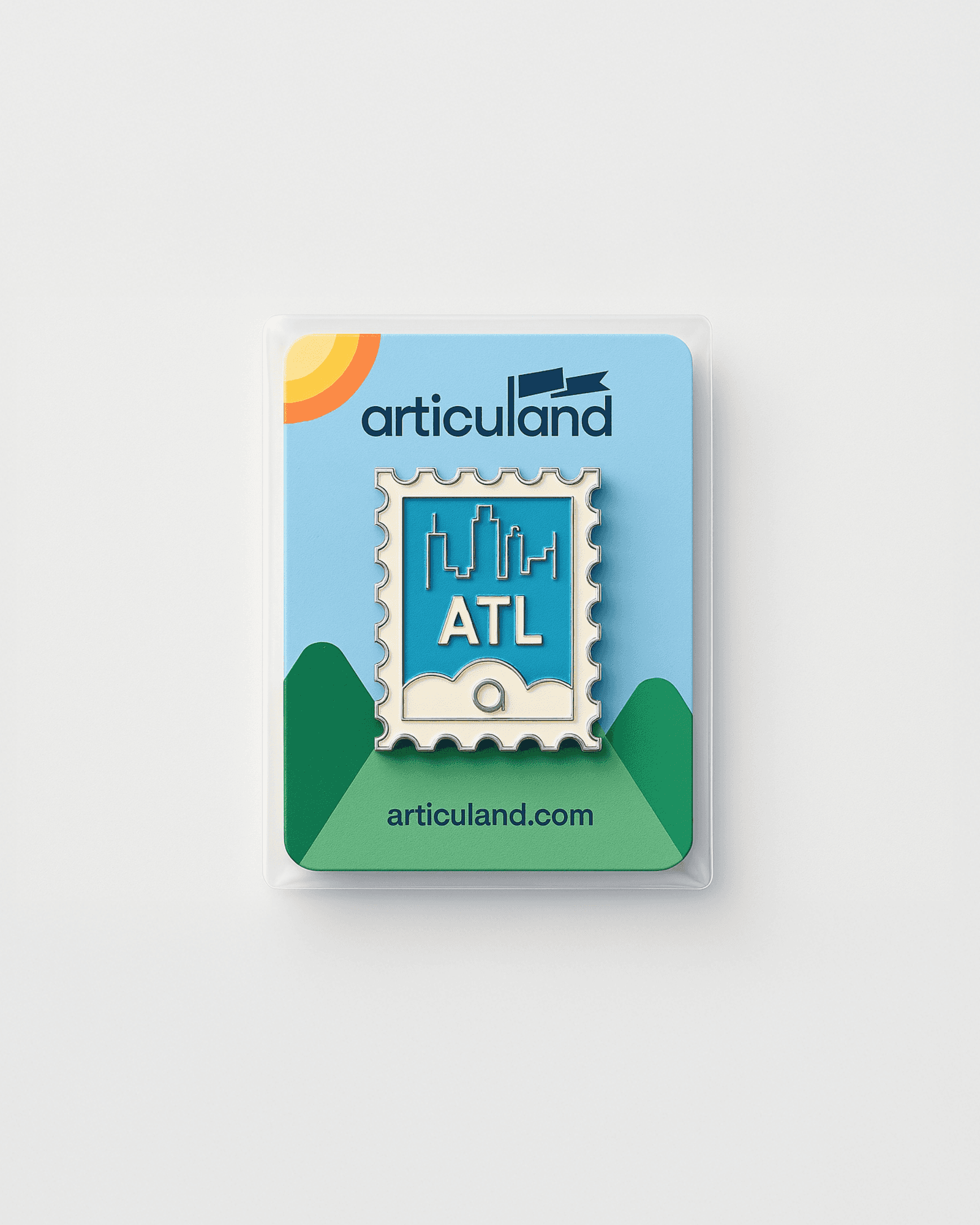
My team and I built a three-tier framework instead of a single swag policy, because different types of merchandise shouldn't be governed the same way. The “Core & Consumable” tier covers the low-cost evergreen basics. The “Culture Builders” tier covers moment-specific items like new hire kits. The “Premium & Conceptual” covers high-touch, campaign-worthy pieces tied to strategic moments like Articuland or On Purpose. Each tier got its own owner split across People, Brand, and Events, and its own SLA, so nobody was guessing how much lead time a request actually needed. Getting the People and Events teams to actually use a tiered system instead of defaulting to whatever vendor was fastest took repeated buy-in over months. When the People team and I rebuilt the new hire kit from something cheap and forgettable into something that actually represented the brand, we created Lumi, a cat/astronaut character (called “Catstronaut”), as the kit's signature piece. Lumi didn't stay confined to onboarding; the character showed up again in Articuland merch and the event's on-site activation, becoming a recurring thread across tiers instead of a one-off gift.


01.
Context
Historically, swag and branded merchandise at Articulate meant whatever was cheapest and fastest, with a logo slapped on top. The intention was there, but the approach was reactive. Whether it was from the People team or the Sales team, there was no shared system spanning orgs that could execute these requests effectively while also delivering high quality goods. Requests came in ad hoc, ownership was unclear, and most items skipped design entirely.
02.
Problem
While brand design wanted to be very thoughtful and intentional about swag, some requests were not worth the time spent. One framework or policy wasn't going to work for both a $2 pen and a flagship conference kit. Treating them the same was exactly how nothing got the attention it needed. The new system had to tell those apart from the start, and also have production considerations.
03.
How I Moved the Org
My team and I built a three-tier framework instead of a single swag policy, because different types of merchandise shouldn't be governed the same way. The “Core & Consumable” tier covers the low-cost evergreen basics. The “Culture Builders” tier covers moment-specific items like new hire kits. The “Premium & Conceptual” covers high-touch, campaign-worthy pieces tied to strategic moments like Articuland or On Purpose. Each tier got its own owner split across People, Brand, and Events, and its own SLA, so nobody was guessing how much lead time a request actually needed. Getting the People and Events teams to actually use a tiered system instead of defaulting to whatever vendor was fastest took repeated buy-in over months. When the People team and I rebuilt the new hire kit from something cheap and forgettable into something that actually represented the brand, we created Lumi, a cat/astronaut character (called “Catstronaut”), as the kit's signature piece. Lumi didn't stay confined to onboarding; the character showed up again in Articuland merch and the event's on-site activation, becoming a recurring thread across tiers instead of a one-off gift.
01.
Context
Historically, swag and branded merchandise at Articulate meant whatever was cheapest and fastest, with a logo slapped on top. The intention was there, but the approach was reactive. Whether it was from the People team or the Sales team, there was no shared system spanning orgs that could execute these requests effectively while also delivering high quality goods. Requests came in ad hoc, ownership was unclear, and most items skipped design entirely.
02.
Problem
While brand design wanted to be very thoughtful and intentional about swag, some requests were not worth the time spent. One framework or policy wasn't going to work for both a $2 pen and a flagship conference kit. Treating them the same was exactly how nothing got the attention it needed. The new system had to tell those apart from the start, and also have production considerations.
03.
How I Moved the Org
My team and I built a three-tier framework instead of a single swag policy, because different types of merchandise shouldn't be governed the same way. The “Core & Consumable” tier covers the low-cost evergreen basics. The “Culture Builders” tier covers moment-specific items like new hire kits. The “Premium & Conceptual” covers high-touch, campaign-worthy pieces tied to strategic moments like Articuland or On Purpose. Each tier got its own owner split across People, Brand, and Events, and its own SLA, so nobody was guessing how much lead time a request actually needed. Getting the People and Events teams to actually use a tiered system instead of defaulting to whatever vendor was fastest took repeated buy-in over months. When the People team and I rebuilt the new hire kit from something cheap and forgettable into something that actually represented the brand, we created Lumi, a cat/astronaut character (called “Catstronaut”), as the kit's signature piece. Lumi didn't stay confined to onboarding; the character showed up again in Articuland merch and the event's on-site activation, becoming a recurring thread across tiers instead of a one-off gift.
Placeholder
xx
xxxxxxxxx
Placeholder
xx
xxxxxxxxx
Placeholder
xx
xxxxxxxxx
xxxx
xxxx
xxxx
xxxx
xxxx
xxxx
xxxx
xxxx
xxxx
